
Skip to content

Clear communicationFree inspections

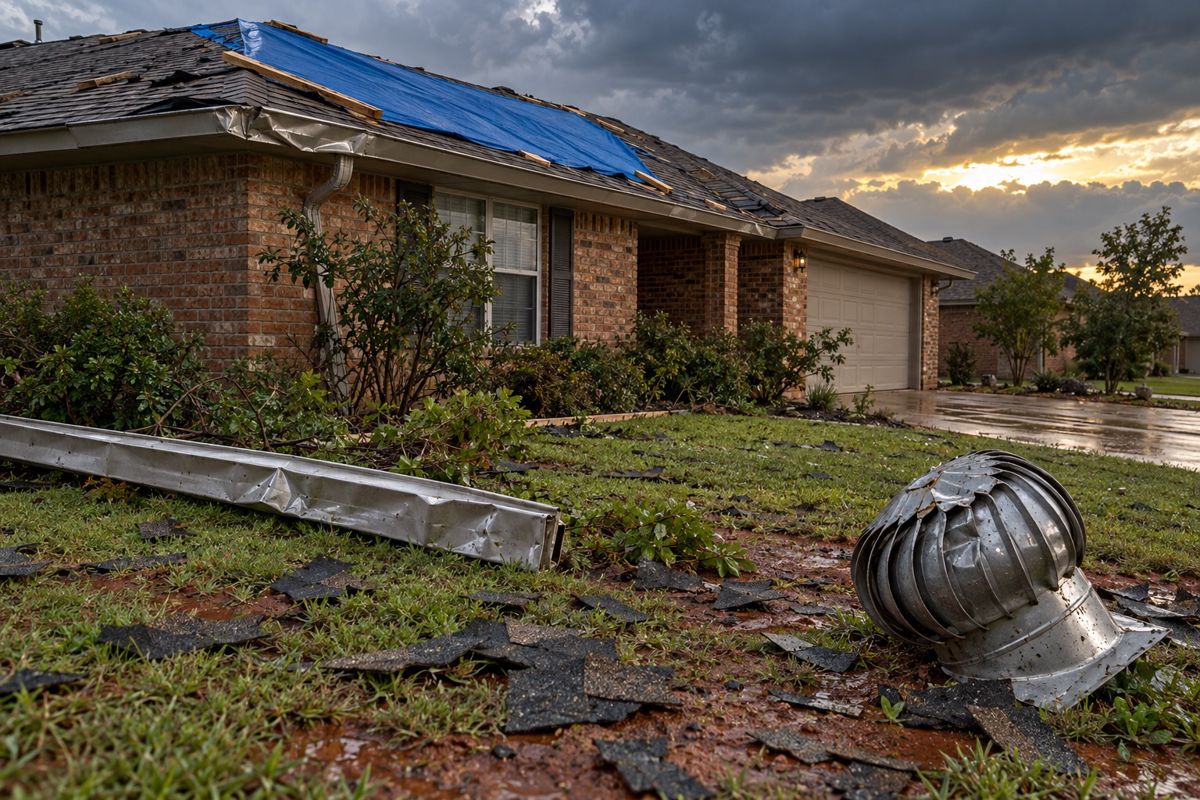
Hail-damaged house roof partly covered with a tarp after a storm

Storm and hail damage, Oklahoma City

Storm damage roof repair in Oklahoma City after hail and wind

What to do first, how to document the damage, and what to expect when repairs and insurance meet.

  • Clear steps to take after a storm
  • Photos and notes for your claim
  • Repairs quoted in writing

What should you do first after a hail or wind storm?

Think about safety before the roof. Stay off a wet or damaged roof, watch for downed lines and keep away from anything that looks unstable. Once the storm has passed, walk around the house and look at the ground, the gutters and the yard.

Then work through this list:

  1. Take wide and close-up photos of any damage you can see from the ground, including dented gutters, fences, siding and the AC unit.
  2. Photograph granules, shingle pieces and debris.
  3. If water is coming in, move belongings, put a bucket under the drip and note the time and place.
  4. Check the attic for wet spots or daylight.
  5. Contact your insurer and ask how to start a claim.
  6. Have the roof looked at by someone you trust before you commit to any repair.

If you are looking for storm damage roof repair Oklahoma City crews can quote, try to book an inspection that documents the damage with photos.

What does hail and wind damage look like on a roof?

Hail damage on asphalt shingles usually shows as bruises. The surface looks dark or shiny where granules were knocked off, and the spot feels soft or dented when pressed. Larger hail can crack the shingle outright. Roof vents, flashing and ridge caps often show dents even when the shingles look fine from a distance.

Wind damage looks different. Shingles may be creased across the middle, curled back, missing from edges and ridges, or lifted so the seal strip has failed. Lifted shingles can flap loose again in the next storm.

Damage is often uneven. The slopes facing the storm can look much worse than the others, so a claim and a repair plan should cover every slope, not only the one with a visible hole. Some damage does not leak for months. It can still shorten the life of the roof, which is why a close inspection matters.

How does an insurance claim for roof damage usually work?

Every insurer has its own process, but the usual steps are similar. You report the damage, an adjuster looks at the roof, and the insurer decides what is covered and how much it will pay. You are responsible for the deductible. In Oklahoma, wind and hail deductibles are often a percentage of the home's insured value, so they can be larger than people expect. Check your policy before you need it.

Policies also differ on how roofs are paid. Some pay the cost to replace the roof, and others pay a reduced amount based on the roof's age and wear. Ask which applies to you.

A roofer can document the damage and give you a written quote, but the claim decision belongs to the insurer. Oklahoma law limits what contractors may do with deductibles and claims, so be wary of anyone who offers to cover or waive yours. If something sounds too generous, check it with your insurer. For the repair side, see roof repair.

Repairs range from replacing a few lifted shingles to a full new roof. The scope depends on how much of the roof was hit and how old the existing roofing is. A typical job may include temporary protection such as a tarp, removing damaged shingles, replacing soft decking, re-flashing around vents and chimneys, and sealing new roofing in place.

The price depends on:

  • How many slopes are damaged and how badly
  • The age and type of the existing roofing
  • The condition of the decking and underlayment
  • Roof pitch and access
  • Whether matching shingles are still available
  • Permit requirements in your city or town

If the damage is widespread, your best option may be roof replacement. Ask for the written quote to separate storm-related work from anything else, since that helps when the insurer reviews it.

How long does it take, and how do you avoid storm-chaser trouble?

After a major storm, every roofer in the area gets busy. Scheduling can slip, and materials can run short. That is normal. A small repair may be done in a day, and a full replacement often takes one to three working days once materials arrive, weather permitting. Insurance approval can add time before work begins.

Big storms also attract out-of-area crews who go door to door. Not all are dishonest, but some collect deposits and disappear. Protect yourself:

  • Ask for state registration details and proof of insurance, then verify them
  • Get a written scope and quote before work starts
  • Never sign a blank form or hand over the full payment in advance
  • Be careful with any contract that gives someone else control of your claim
  • Take your time, since a safe temporary cover buys you a few days to compare quotes

Call as soon as you suspect damage. Delays can allow more water in and may complicate your claim.

How it works

  1. Call or request a quote

    Tell us what is happening with the roof.

  2. Free inspection

    A roofer checks the roof and gives a written price.

  3. Work done right

    Clean crew, nail sweep, warranty in writing.

What you can expect

1

Clear communication

2

Free inspections

3

Written estimates

4

Local crew

Request storm and hail damage

Tell us what you need and we call you back.

No obligation.

Step 1 of 3

What do you need?

Questions about roofing in Oklahoma City

Should I climb on my roof to check for hail damage?

It is safer not to. Roofs are slippery, steep and easy to damage when you walk on them. Look from the ground with binoculars, check gutters, vents and the AC unit for dents, and look at the attic from inside. A professional inspection can document damage without you taking the risk.

How soon should I report storm damage to my insurer?

As soon as you reasonably can. Many policies have time limits for filing wind and hail claims, and delays can make it harder to link damage to a particular storm. Read your policy for the deadline, take dated photos right away and keep records of every conversation with the insurer.

Can a roofer pay my deductible?

You should treat that as a warning sign. Oklahoma law limits contractors from waiving or rebating deductibles, and the rules can carry penalties. Do not rely on a contractor's word. Ask your insurer directly what is allowed and keep every quote and invoice in writing.

Is every dent in a roof vent a sign of roof damage?

Not always, but dents in metal vents, flashing and gutters tell you hail was big enough to matter. They are a reason to check the shingles closely. Hail damage on shingles can be subtle, so do not rule it out because the roof looks fine from the yard.

What if my roof is leaking and I cannot get a repair right away?

Limit the damage. Move belongings, set out buckets and cover furniture. Say clearly that water is coming in when you call a roofer and ask what temporary protection is possible. Keep photos and receipts for any emergency cover, since your insurer may ask for them.

Ready when you are. Call now or request a quote online.