
Skip to content

Clear communicationFree inspections

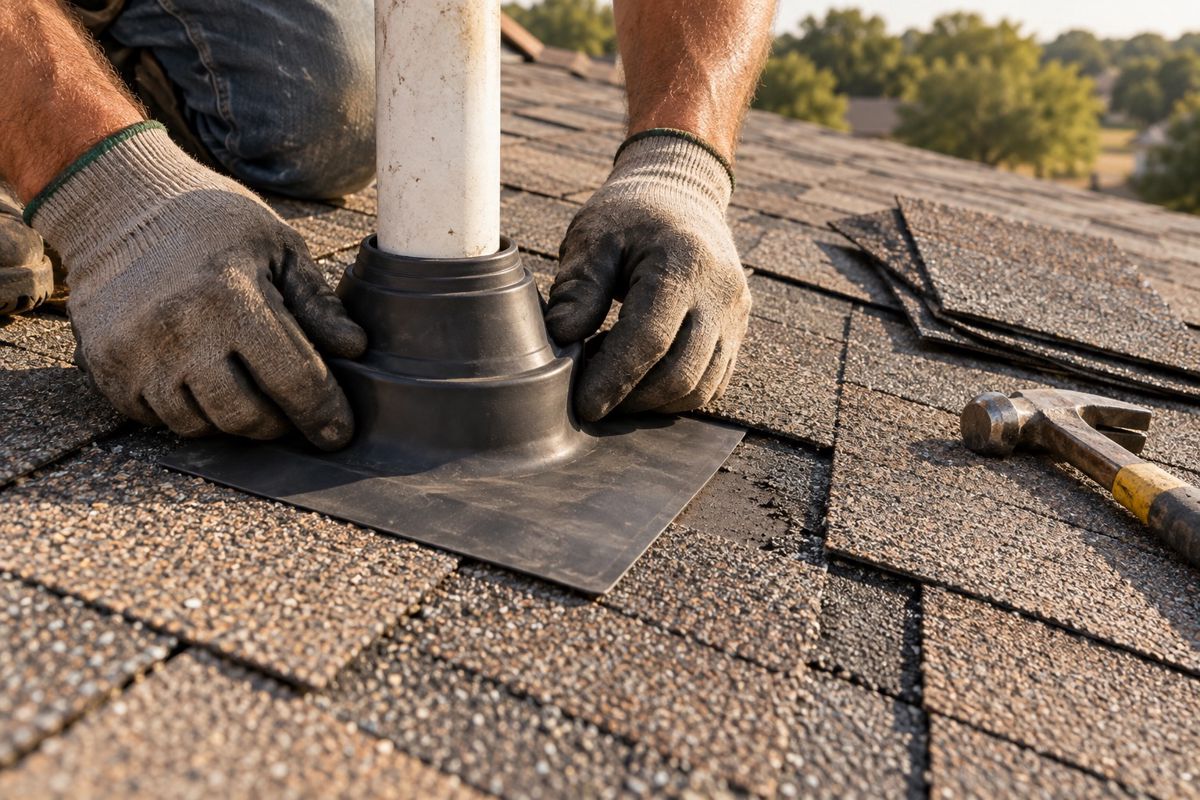
Roofer's gloved hands replacing a vent boot on a shingle roof

Roof repair and leaks, Oklahoma City

Roof repair in Oklahoma City, from small leaks to storm wear

Find where the water is coming from, fix that spot properly, and get the plan in writing first.

  • Leak tracing, not guesswork
  • Missing and lifted shingle repair
  • Honest word on repair versus replace

What causes roof leaks in Oklahoma City?

Most leaks start small and travel. Water finds a weak spot, runs along the deck or a rafter, and shows up as a ceiling stain several feet from the real problem. In central Oklahoma the usual causes are:

  • Shingles lifted or torn off by straight-line wind
  • Hail impacts that crack the shingle mat or knock off granules
  • Cracked rubber boots around plumbing vent pipes, which the sun breaks down over time
  • Loose or rusted flashing at chimneys, walls and skylights
  • Worn sealant and exposed nail heads
  • Valleys where debris holds water against the shingles

Heavy spring rain can turn a pinhole into a visible leak overnight. If you have a stain on a ceiling, treat it as a sign that water has already been getting in for a while.

How is a roof leak found?

Leak detection works backward from the stain. Someone checks the attic first, looking at the underside of the deck for dark streaks, wet insulation and daylight. Then they go up on the roof and examine the area uphill from the stain, since water runs down before it drips.

The most common culprits get checked first, such as flashing, vent boots and penetrations. If the source is not clear, a hose test can help. One person sprays small sections while another watches from the attic. It takes patience, because a quick spray across the whole roof proves nothing.

A written note on what was found, with photos, helps you decide next steps. If the leak turns out to be one of many problems, that is a sign to look at roof replacement instead of paying for repeated patches.

What does a roof repair involve?

The work depends on the cause. Here is what a repair can look like in practice.

Replacing damaged shingles

Broken or missing shingles are lifted out and new ones are nailed in and sealed. The new pieces should match the existing roof as closely as the available stock allows, and older roofs may not match perfectly.

Re-flashing a joint

Metal flashing at a chimney, wall or skylight is removed, the area is dried and cleaned, and new flashing is set and sealed. Smearing sealant over old flashing is a short-term patch at best.

Replacing a vent boot

A cracked rubber collar around a vent pipe is a frequent leak source. The boot is swapped for a new one and sealed in.

Fixing damaged decking

If the deck underneath is soft or rotted, that section is cut out and replaced before any shingles go back on.

A repair quote depends on how hard the problem is to reach and how much hidden damage there is. These are the main factors:

  • How steep the roof is and how safely the area can be reached
  • How many shingles or how much flashing needs replacing
  • Whether the deck has rot that has to be cut out
  • How long it takes to trace the leak when the source is unclear
  • Whether the shingles are old enough that a clean match is difficult
  • Whether the repair is tied to a storm claim that needs documentation

Small repairs on a roof in good shape are very different from patching a roof that is failing everywhere. If your roof is old and the repair bill keeps climbing, ask for a quote on both choices so you can compare them side by side. For anything linked to a recent storm, read the notes on storm and hail damage first.

How long does a repair take, and when should you call?

Many repairs are done in a few hours to a day, once the weather allows. Tracing a stubborn leak can take longer. Wet decking and active rain delay the work, and a crew will not seal over damp materials just to say the job is done.

On the day, expect someone to check the attic and the roof, show you what they found, and carry out the repair you agreed to. Keep pets inside and clear the area under the work, since small debris can fall.

Call when you see a ceiling stain, bubbling paint, daylight in the attic, shingles in the yard after a storm, or a vent boot that looks cracked. When water is coming in, say so on the first call and ask what temporary protection is possible. Back on the home page you can find the other services and the short contact form.

How it works

  1. Call or request a quote

    Tell us what is happening with the roof.

  2. Free inspection

    A roofer checks the roof and gives a written price.

  3. Work done right

    Clean crew, nail sweep, warranty in writing.

What you can expect

1

Clear communication

2

Free inspections

3

Written estimates

4

Local crew

Request roof repair

Tell us what you need and we call you back.

No obligation.

Step 1 of 3

What do you need?

Questions about roofing in Oklahoma City

Why does my ceiling stain appear far from the roof damage?

Water does not drip straight down. It runs along the roof deck, a rafter or the insulation until it finds a place to drop. The stain on your ceiling can be several feet from the opening on the roof. That is why leak tracing starts in the attic and works uphill rather than looking only at the spot above the stain.

Can I just put sealant on the leak myself?

A tube of sealant can slow a small leak, but it often hides the real source and can make a later repair harder. Climbing on a wet or steep roof is also risky. If you must act, stay off the roof, put a bucket and a tarp inside, move belongings and take photos. Then have someone find the actual cause.

Is a repair worth it on an older roof?

It can be, if the rest of the roof is in fair shape and the problem is limited. If the shingles are curling, cracking and shedding granules everywhere, repairs only buy time. Ask for a written quote on the repair and on a replacement, and ask how much life the roof realistically has left.

Will new shingles match my old ones?

Often close, but not always exact. Shingles fade in the Oklahoma sun, and manufacturers change colors and lines over the years. A repair patch may look slightly different at first. A roofer can show you the closest available option and explain how it will blend as it weathers.

Does homeowners insurance cover a roof leak?

It depends on the cause. Damage from a sudden event like hail or wind may be covered, while leaks from age or poor maintenance often are not. Check your policy, photograph the damage, and call your insurer before you commit to a large repair. Keep any receipts for temporary protection.

Ready when you are. Call now or request a quote online.