Skip to content

Clear communicationFree inspections

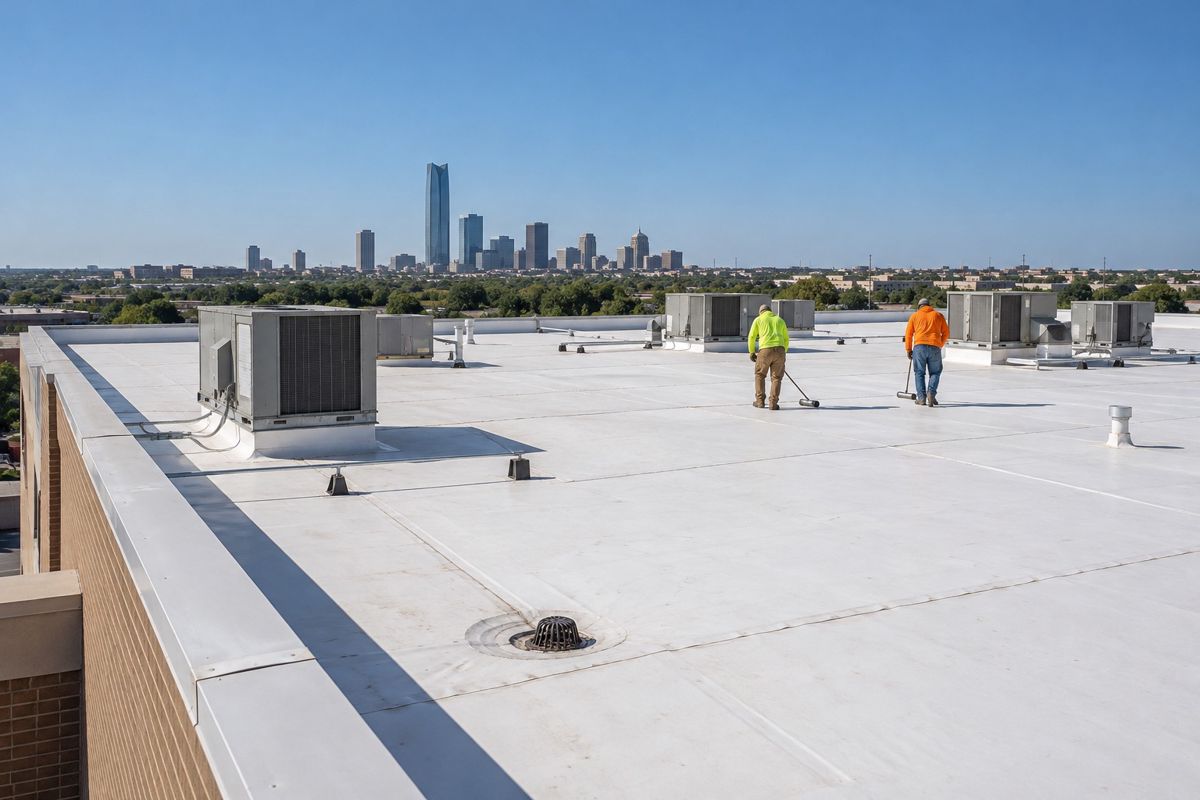
Flat white membrane roof with rooftop units on a commercial building

Commercial roofing, Oklahoma City

Commercial roofing in Oklahoma City for flat and low-slope roofs

For owners and managers of shops, offices, warehouses and apartment buildings who need the roof assessed, repaired or planned for.

  • Flat and low-slope roof repairs
  • Hail damage assessment for buildings
  • Scope and plan in writing

Step 1 of 3

What do you need?

What kinds of commercial roofs are common in Oklahoma City?

Most commercial buildings in the metro have flat or low-slope roofs. The material tends to be one of a few types. Single-ply membranes such as TPO and EPDM are common on shops and offices. Modified bitumen and built-up roofs show up on older buildings. Metal roofs appear on warehouses, churches and some retail buildings.

Each type behaves differently under hail, heat and ponding water. Single-ply membranes can puncture or bruise. Seams can open as the roof ages. Built-up roofs can blister and crack. Metal panels can dent, and fasteners can back out over time.

If you are looking into commercial roofing Oklahoma City owners can plan around, the first step is to know which type you have and how old it is. That decides whether the best path is a repair, a coating or restoration, or a full replacement. Ask the roofer to put the roof type and condition in writing.

What are the common problems on flat roofs here?

Flat roofs rely on drainage and sealed seams. When either fails, water sits and finds a way in. Local problems include:

  • Ponding water around drains and low spots, which wears membranes faster
  • Hail impacts that bruise or puncture the roofing surface
  • Open or lifting seams where the membrane meets walls, curbs and edges
  • Clogged drains, scuppers and gutters after storms
  • Cracked or dried sealant around rooftop units, vents and pipes
  • Heat cycling in summer that stresses flashing and seams

Rooftop units add risk. Every curb, pipe and cable run is a spot where water can enter if the flashing is not right. A building with several units needs more attention than a clean, open roof.

Small leaks in a commercial building can damage inventory, ceiling tiles and electrical equipment, so tracing the cause matters. See also roof repair.

What does commercial roof work involve?

The work starts with an assessment. Someone walks the roof, checks seams, drains, flashing, penetrations and the condition of the surface, and takes photos. You get a written scope with options, such as spot repairs, restoration or replacement.

For repairs, damaged areas are cleaned, dried and patched or re-sealed, and drains are cleared. For a full replacement, the existing roof is removed or prepared, wet insulation is replaced, a new membrane or panel system is installed, and flashing and edges are detailed.

Planning matters on a working property. Ask how the crew will protect tenants, customers, parking areas and equipment. Ask when noise, fumes or lane closures are likely. Ask what happens if rain arrives mid-job, and how open sections will be covered at the end of each day. A clear plan avoids most surprises.

Commercial pricing varies more than residential, because buildings differ so much. Factors include:

  • The roof area and the system in place
  • Whether the insulation is wet and needs replacing
  • The number of rooftop units, drains and penetrations
  • Access, such as height, equipment needs and working around operations
  • Repair, restoration or full replacement
  • Safety requirements and any permit fees
  • Warranty terms offered with the work

Ask what any warranty covers and who stands behind it, and get the terms in writing. A warranty is only as strong as the paperwork behind it. If the building has been hit by hail, an inspection with photos helps when you talk to your insurer. Look back at the home page for the other services we cover.

How long does it take, and when should you call?

A spot repair can take a day or less. A full replacement of a small shop roof may take several days, and larger buildings take longer. Weather, material delivery and building access all affect the schedule. Rain can stop work on a membrane roof, and Oklahoma spring storms can add delays.

On the day, expect a crew to set up equipment, protect the area below and work in sections so the building is not left open. Ask who your point of contact is on site, and when you will get a summary of what was done.

Call when you see ceiling stains or dripping, ponding that lasts after a rain, torn or lifting seams, or damage after a hailstorm. Also call before you buy a building or sign a lease, because the condition of the roof can affect costs for years. Early attention almost always costs less than a rushed repair after a leak has hit your stock.

How it works

  1. Call or request a quote

    Tell us what is happening with the roof.

  2. Free inspection

    A roofer checks the roof and gives a written price.

  3. Work done right

    Clean crew, nail sweep, warranty in writing.

Clear communication
Free inspections
Written estimates
Local crew

Request commercial roofing

Tell us what you need and we call you back.

No obligation.

Step 1 of 3

What do you need?

Questions about roofing in Oklahoma City

How do I know if my commercial roof has hail damage?

Look for dents on rooftop units, vents and metal flashing, punctures or bruises on the membrane, and fresh leaks after a storm. Many hail marks are hard to see from the ground. A roof assessment with photos is the most reliable way to document damage, especially if you plan to file an insurance claim.

Is it better to repair, coat or replace a flat roof?

It depends on the roof's condition and age. Repairs suit isolated damage on a sound roof. Coatings or restoration can suit roofs that are mostly solid but worn at the surface. Replacement suits roofs with wet insulation, widespread failure or repeated leaks. Ask for the options in writing, with the reasons for each.

Can you work around my business hours?

Often, yes, but it depends on the job. Rooftop work is usually done during the day, and noisy or smelly steps can be scheduled around opening hours when possible. Tell the roofer about customer traffic, deliveries and sensitive equipment before the quote, so the plan reflects it.

What should a commercial roofing quote include?

It should name the roof system, the scope of work, how wet insulation is handled, flashing and drain details, cleanup, payment terms and any warranty. It should also say what is not included. A vague one-line quote is a warning sign on a project of this size.

Do I need a permit for a commercial roof replacement?

Often yes, but rules vary by city and by the type of work. Ask your roofer who is responsible for pulling any permit and for scheduling any inspections. Check with your city or town building office if you are unsure, and keep copies of the paperwork for the building file.

Ready when you are

Call now or request a quote online.

(405) 555-0112